



Cairo & Giza · Oases & Safari
Cairo & the White Desert, 5 Days
The pyramids and a night under the stars of the Sahara
Price on request
Package
Oases, Middle Egypt and Fayoum — from Bahariya to Tell el-Amarna
A great loop through the Egypt beyond the classic circuits: the desert oases, the sites of Middle Egypt rarely visited by international travellers, and the green Fayoum, before ending at the pyramids.
Highlights
Arrival in Cairo, welcome at the airport and private transfer to your hotel.
Meals: picnic lunch · dinner at leisure.
At 5 a.m. your guide and driver collect you from your hotel in Cairo or Giza for the drive to Bahariya Oasis, about 350 km south-west of Cairo (around four hours). On arrival you switch to a 4×4 to cross the desert.
Visit the museum of the golden mummies and the underground Ptolemaic tombs of Zed-Amun-ef-ankh and his son Bannentiu, near the centre of the oasis, whose images of gods and hieroglyphs keep remarkably vivid colours, then the little-known temple of Ain el-Muftella, built in the 26th dynasty and enlarged in Greek and Roman times. Lunch in the oasis.
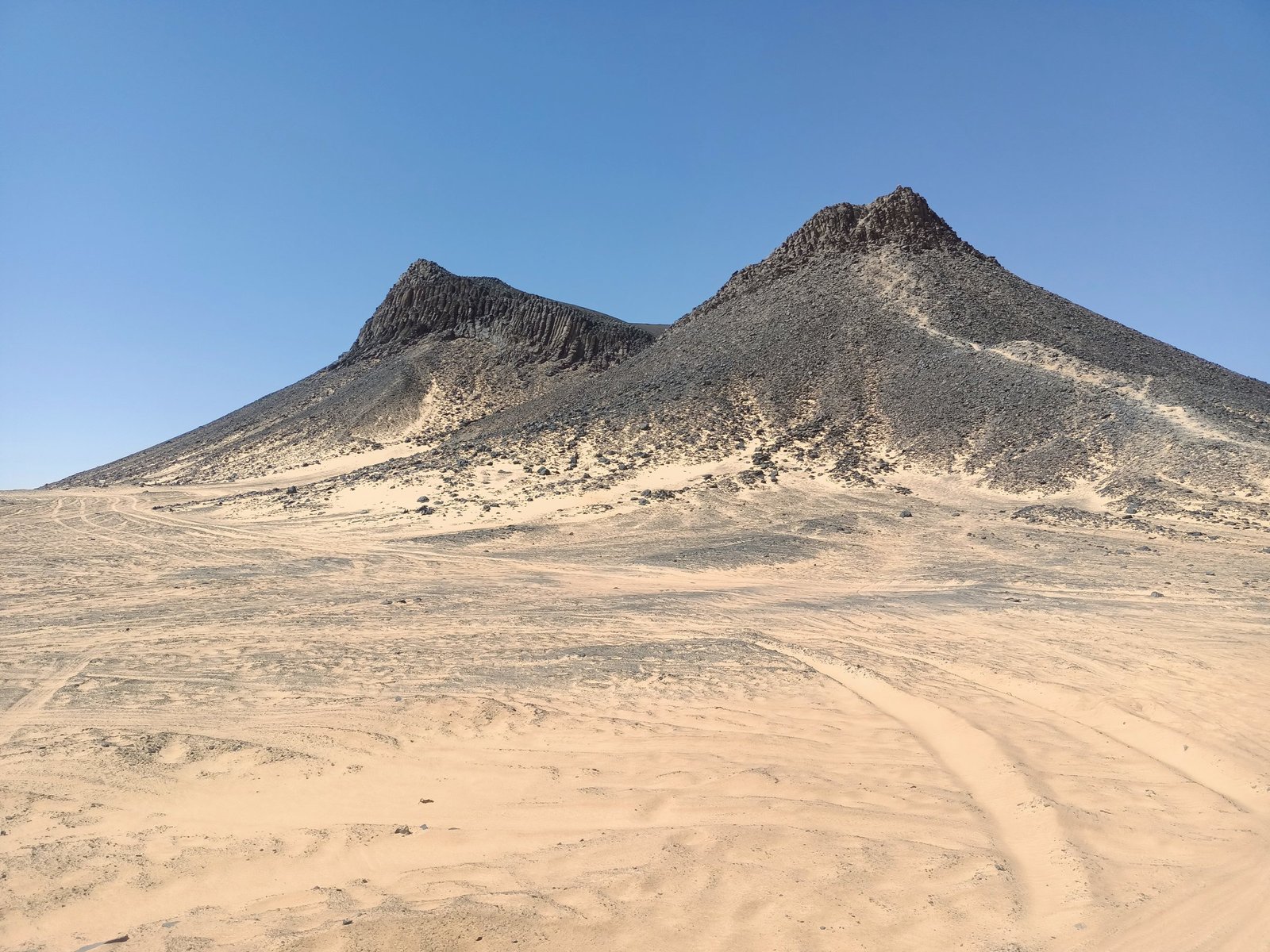
Heading south, cross the Bahariya depression and the Black Desert, named after its dark stones and conical hills, with a stop at Crystal Mountain, a hill made entirely of quartz crystals. Climbing onto the plateau, reach the escarpment above the Farafra depression and enter the legendary White Desert. Overnight in a fixed tented camp.
Meals: packed breakfast · picnic lunch · dinner at the camp.
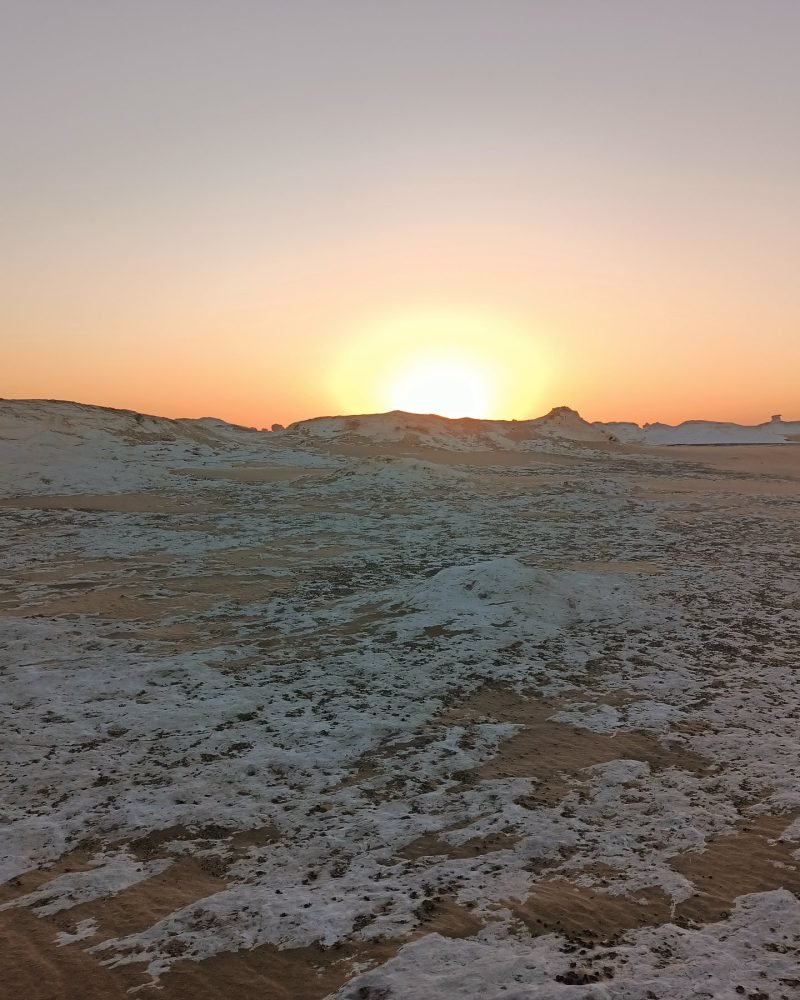
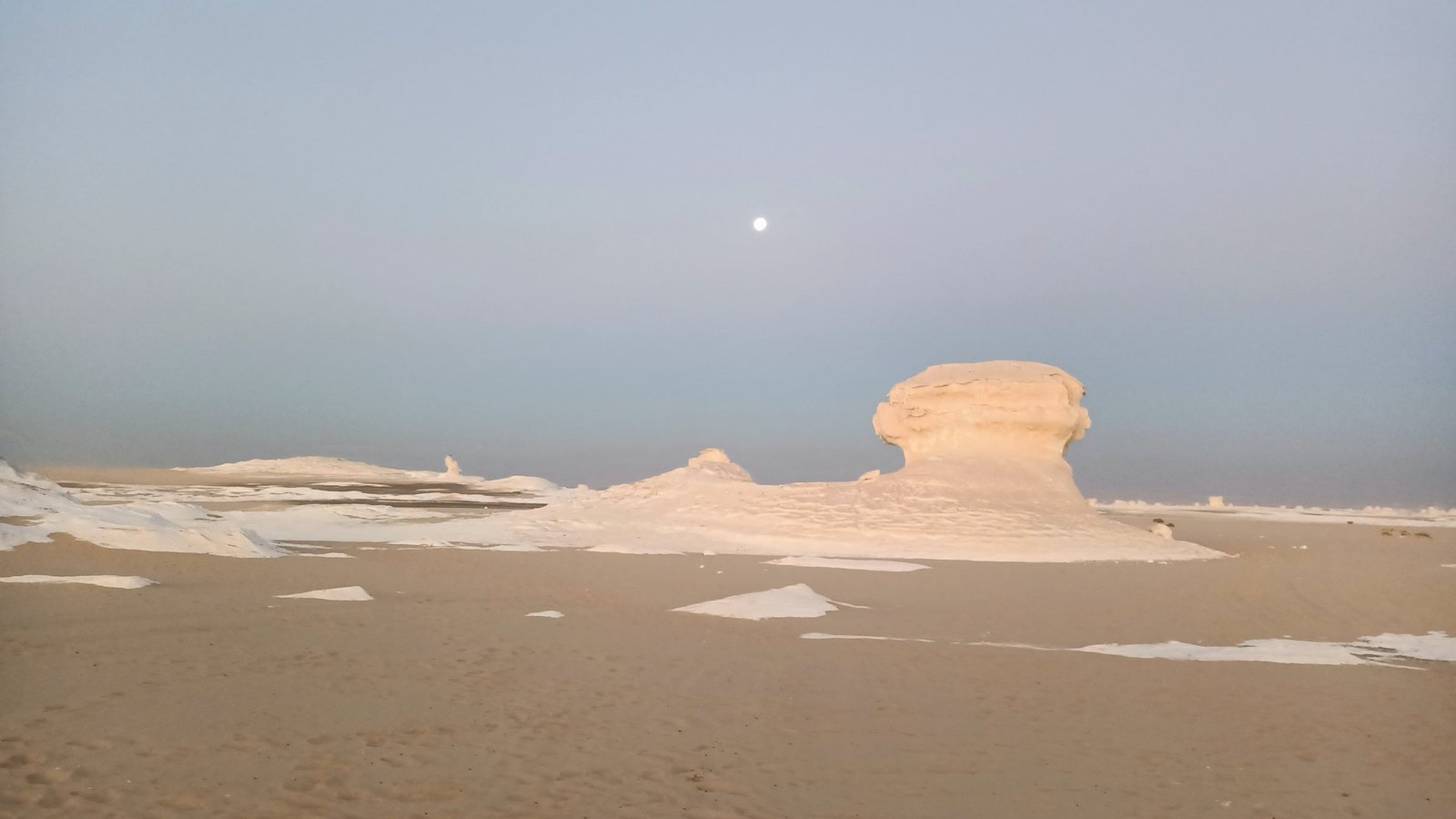
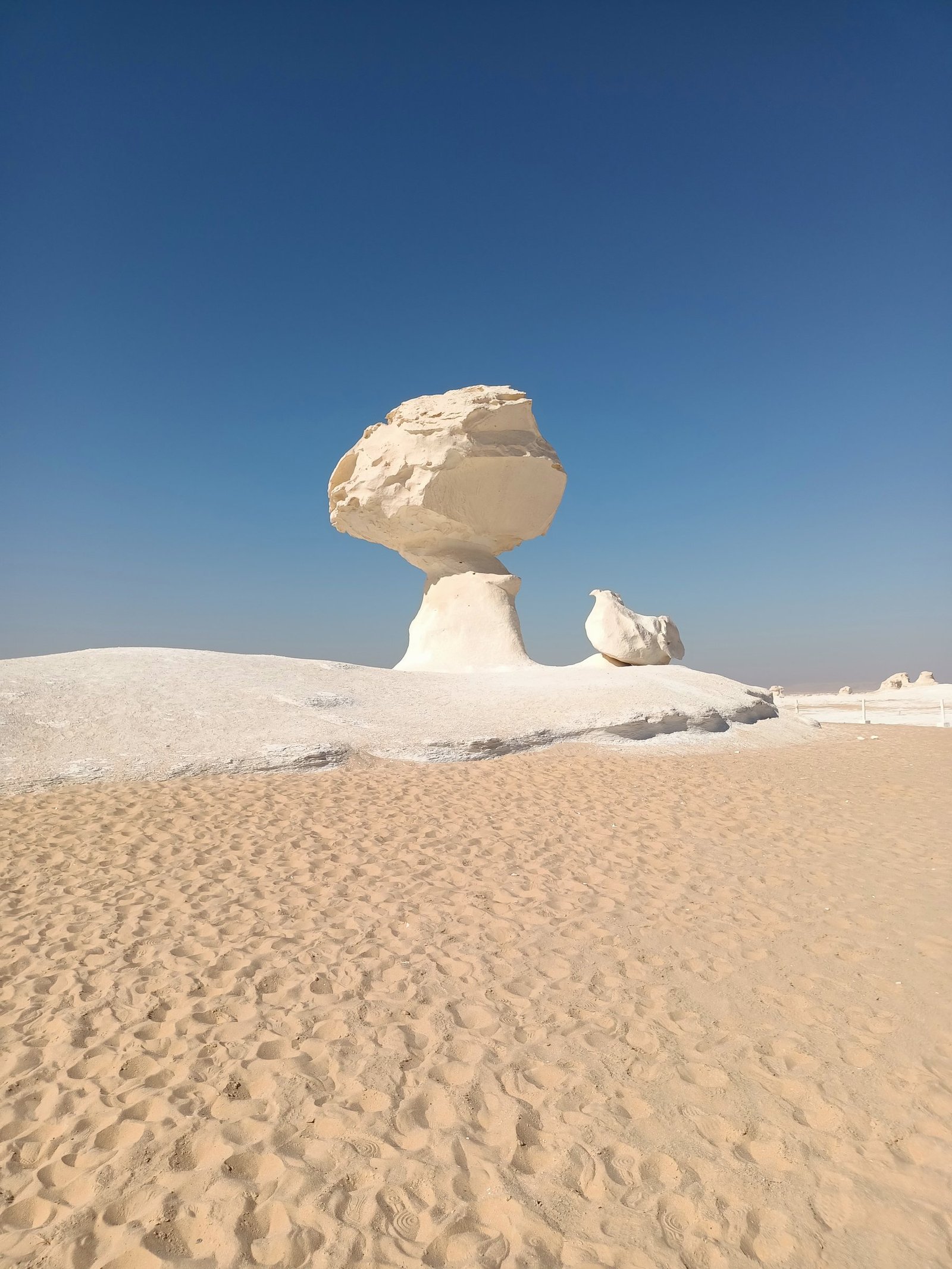
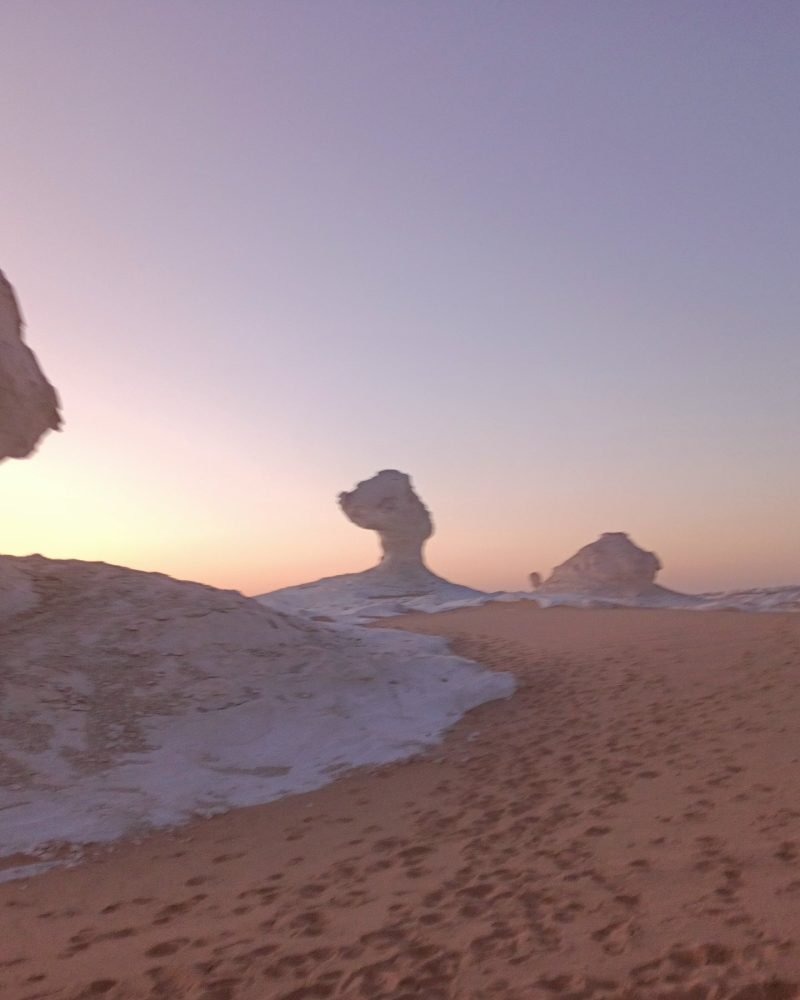
A full day in the White Desert. For miles the track winds across golden sand among dazzling white limestone formations — pinnacles, towers and mushrooms eroded by water and wind into ever-changing, theatrical shapes that create landscapes of rare beauty.
The entrance to the Agabat valley — “the valley of obstacles”, where dunes weave between towering white rocks — is unforgettable; the White Desert surprises even seasoned Saharan travellers. Walks, springs shaded by tall trees and plenty of time for photographs. Overnight in a fixed tented camp.
Meals: breakfast at the camp · picnic lunch · dinner at the camp.
After breakfast, continue to Dakhla Oasis.
First visit Al-Qasr, the old medieval Islamic town and a small jewel of desert architecture: a fortified citadel of lanes, alleys and mud-brick houses, partly buried by sand, with a mud-brick mosque and a well-preserved 21-metre minaret. Continue to the temple of Deir el-Hagar — “the stone monastery” — dedicated to the Theban gods Amun, Mut and Khonsu and built under the Roman emperors of the 1st century AD, then the rock tombs of Al-Muzawwaqa, “the decorated”, named after their colourful Roman-era paintings. Check in at your hotel in the oasis.
Meals: breakfast at the camp · picnic lunch · dinner at the hotel.
After breakfast, head for the eastern edge of Dakhla and the village of Bashendi, built — like most towns in the oasis — on the site of a much older settlement. Its domed tomb belongs to a medieval sheikh, Pasha Hindi, who gave the village its name; the adjacent Tomb of Kitinos, from the 2nd century AD, has six chambers whose walls show the owner meeting the gods. Continue to Kharga.
In Kharga, visit the Temple of Hibis, dedicated to Amun-Ra, his wife Mut and their son Khonsu, whose walls show hundreds of Egyptian deities — a true pantheon in stone — and what remains of its avenue of sphinxes. In the desert around the oasis, the Christian necropolis of El-Bagawat preserves some 200 domed funerary chapels from the early Christian era. Overnight in Kharga.
Meals: breakfast at the hotel · picnic lunch · dinner at the hotel.
After breakfast, set off towards Asyut, for centuries a crossroads of the caravan routes linking sub-Saharan Africa and the Mediterranean, and still an agricultural centre on the fertile plain of the Nile. Continue to El Minya, once a major trading town of Upper Egypt, especially for cotton; its squares, tree-lined avenues and faded villas make it a pleasant base for the archaeological sites nearby.
Visit Tell el-Amarna, the city founded around 1348 BC by the “heretic” pharaoh Akhenaten as his new capital, when he abandoned the cult of Amun for that of the Aten, and the tombs of Beni Hassan, where 39 Middle Kingdom provincial governors were buried in large rock-cut tombs, some painted with scenes of daily life and war. Overnight in Minya.
Please note: reaching the tombs of Tell el-Amarna and Beni Hassan involves climbing a stairway of about 150 steps at each site. Comfortable shoes with non-slip soles are recommended; once there, the tomb entrances are wide and easy.
Meals: breakfast at the hotel · picnic lunch · dinner at the hotel.
After breakfast, set off for Fayoum, a green and fertile region rich in natural beauty and archaeological sites, still little known to international travellers. Its marshes — fed by the Bahr Yussef canal and by the great lake Moeris, today Lake Qarun — were drained by the pharaohs of the 12th dynasty and turned into royal hunting and fishing grounds.
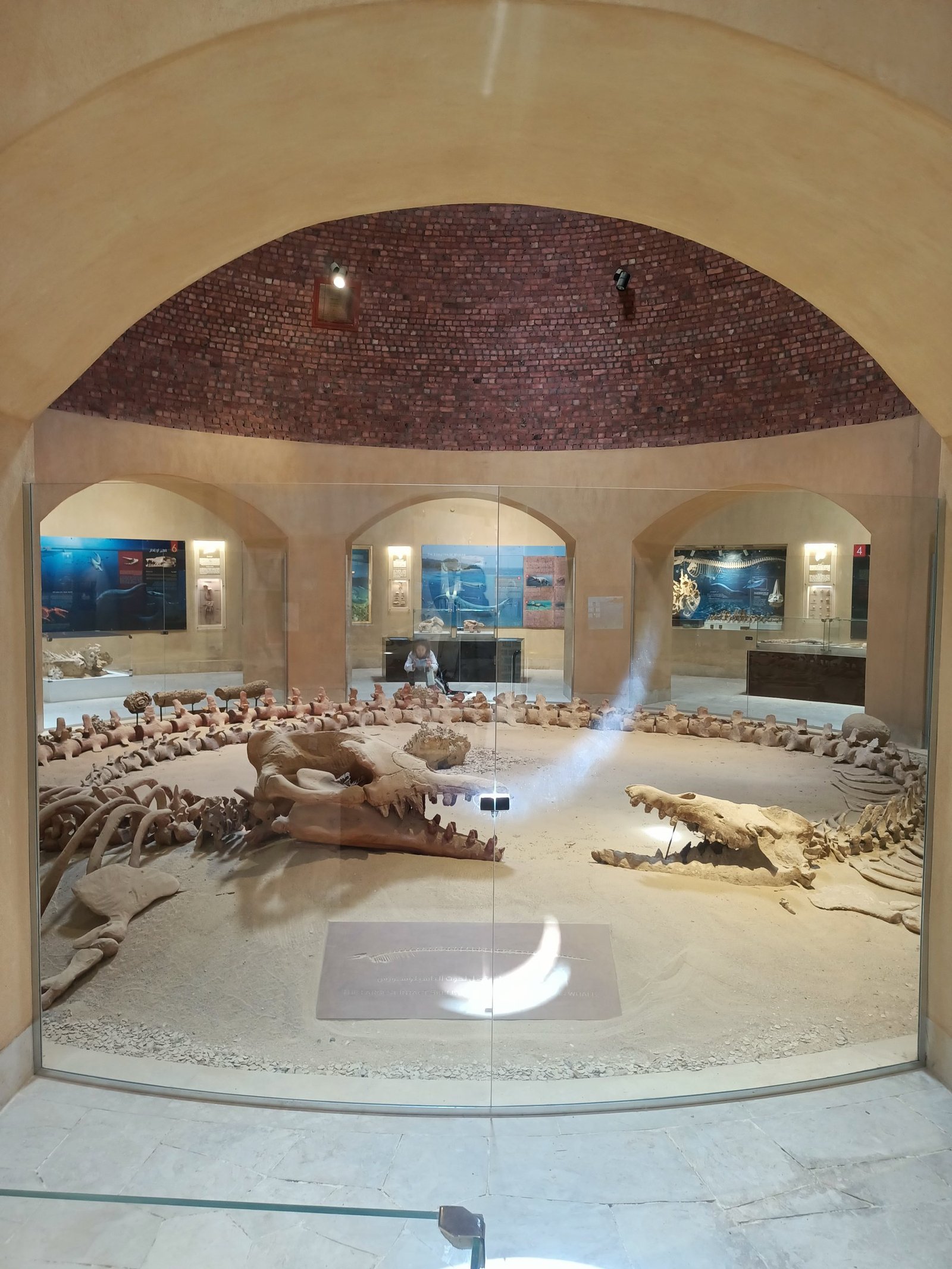
Drive into the sands of Wadi El Hitan to the UNESCO-listed palaeontological site at the heart of an ancient valley. Its hundreds of fossils of early whales document one of evolution’s great transitions, from land animal to ocean mammal; the fossils of sharks, crocodiles, sawfish, turtles and rays found here show that around 40 million years ago this desert lay beneath the sea.
Picnic lunch on the shore of the lower lake. In the afternoon the track to Wadi El Rayan opens onto sweeping views of desert ridges and great sand dunes.
At the end of the day, visit the village of Tunis on the southern shore of Lake Qarun. In the late 1960s the Swiss potter Evelyne Porret settled here, opening her studio and a school to teach the craft to local people; today Fayoum pottery is among the most sought-after in Egypt, and a stroll along the village’s “pottery street” is a delight.
Overnight in Fayoum.
Meals: breakfast at the hotel · picnic lunch · dinner at the hotel.
A full day exploring the north of the oasis. Follow the northern shore of Lake Qarun, admired from above, then enter the surrounding desert plateau, rich in ever-changing rock formations. Reach the unexpected Graeco-Roman town of Soknopaiou Nesos, today Dimeh el-Siba: founded in the 3rd century BC on what was once an island, it still preserves its massive mud-brick walls and the aura of its temple to Sobek, the crocodile god.
Further north the landscape changes again at Qasr el-Sagha, a Middle Kingdom temple whose seven unfinished inner chapels keep its original purpose a mystery. Nearby lies a petrified forest: millions of years ago this arid land was a lush tropical jungle, and today the ground is scattered with tree trunks turned to stone. Return to Cairo; overnight in Cairo.
Meals: breakfast at the hotel · picnic lunch · dinner at the hotel.
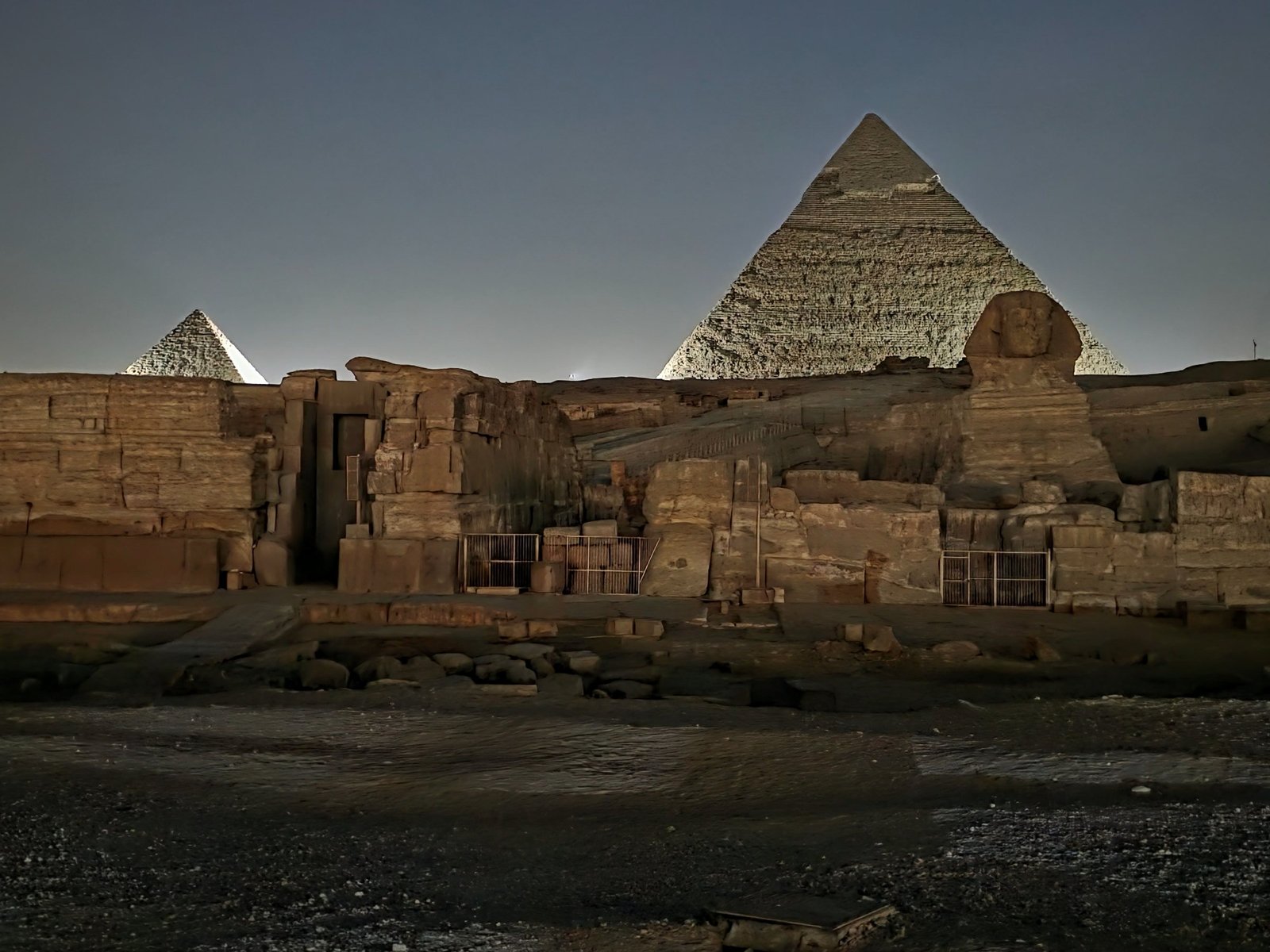
After breakfast, a short drive takes you to the Giza Plateau and the great pyramids of Khufu (Cheops), Khafre (Chephren) and Menkaure (Mycerinus), built around 2500 BC. Continue to the Great Sphinx, the lion-bodied guardian whose face is traditionally attributed to Pharaoh Khafre.
In the afternoon, travel south in your private vehicle, through palm groves and irrigation canals, to Saqqara. Here the Step Pyramid of Djoser rises from the sand in six tiers — the oldest monumental stone building on Earth and the first pyramid ever built. Visit the Pyramid of Unas, the first to be inscribed with hieroglyphic texts beneath its star-painted ceiling, and the mastabas of high court officials, whose reliefs of daily life in ancient Egypt still keep their original colours. Overnight in Cairo.
Meals: breakfast at the hotel · picnic lunch · dinner at leisure.
Breakfast and check-out with your luggage.
Morning at the Grand Egyptian Museum (GEM), the monumental new museum facing the Giza pyramids behind a striking façade of glass and alabaster. Beyond its countless statues and works of art, the museum presents the complete funerary treasure of Tutankhamun — more than 5,000 objects displayed together for the first time, including the celebrated golden mask of the young pharaoh.
In the afternoon, continue to Islamic Cairo to visit Al-Azhar Mosque and the famous Khan el-Khalili bazaar, whose alleys are lined with workshops and stalls selling cotton, copper, perfumes, leather, silver, gold and antiques.
Transfer to Cairo International Airport or Sphinx Airport for your departure flight.
Meals: breakfast at the hotel · picnic lunch.
Reaching the tombs of Tell el-Amarna and Beni Hassan involves climbing a stairway of about 150 steps at each site. Comfortable shoes with non-slip soles are recommended.
Book this journey
Send your request: our team checks availability, confirms every detail with you and only then asks for the deposit.
Request received
Your reference
Keep exploring
Cairo & Giza · Oases & Safari
The pyramids and a night under the stars of the Sahara
Price on request
Cairo & Giza · Oases & Safari
The Italian memorial, the oracle of Amun and the Great Sand Sea
Price on request
Cairo & Giza · Oases & Safari
The complete Egypt of museums, deserts, oases and temples
Price on request